

World’s First Reasoning AI Model कोणते होते?
आजच्या काळात AI फक्त प्रश्नांची उत्तरे देत नाही; ते गणित सोडवते, programming problems हाताळते, scientific questions वर काम करते आणि complex decisions साठी reasoning वापरते.
पण इथे एक मनोरंजक प्रश्न निर्माण होतो — World’s first reasoning AI model कोणते होते?
या प्रश्नाचे उत्तर एकाच नावात देणे थोडे कठीण आहे, कारण “reasoning AI” याची व्याख्या आपण कशी करतो यावर उत्तर बदलते.
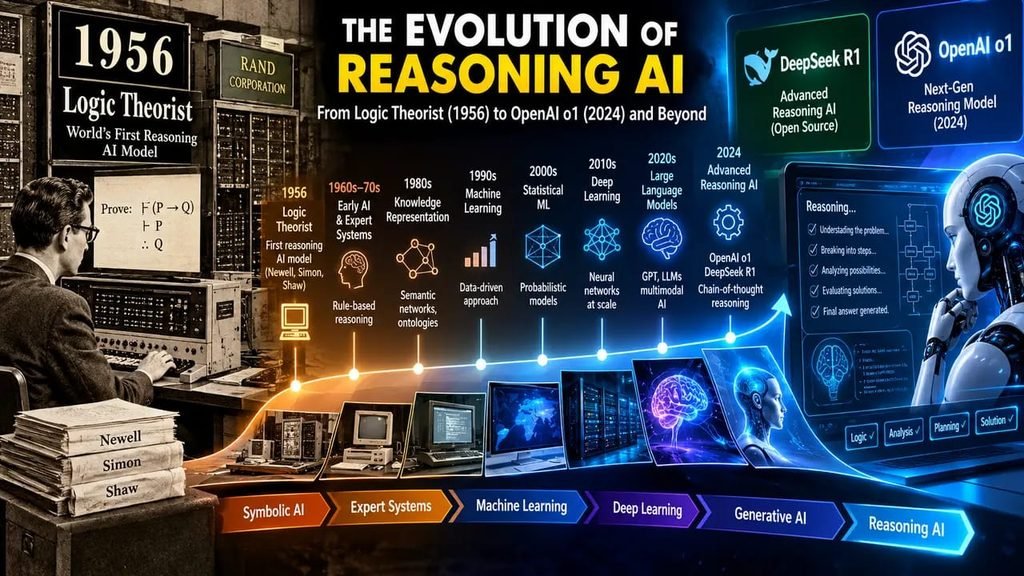
जर आपण इतिहासातील मानवी पद्धतीने problem-solving आणि logical reasoning करण्यासाठी तयार केलेला AI program पाहिला, तर 1950 च्या दशकात विकसित झालेला Logic Theorist हा सर्वात महत्त्वाचा आणि widely recognized milestone आहे.
आणि जर आपण आधुनिक Reasoning AI Model / Reasoning LLM च्या युगाकडे पाहिले, तर OpenAI o1, ज्याचा o1-preview release 12 September 2024 रोजी झाला, हा आधुनिक reasoning-model era मधील अत्यंत महत्त्वाचा turning point ठरला. OpenAI ने याला त्यांच्या नवीन o-series मधील पहिला model म्हणून सादर केले, जो complex problems सोडवण्यासाठी अधिक वेळ “thinking” मध्ये घालवतो.
यानंतर DeepSeek R1 ने January 2025 मध्ये reasoning models ला open-weight ecosystem मध्ये मोठ्या प्रमाणावर पोहोचवले. त्यामुळे DeepSeek R1 vs OpenAI o1 ही तुलना AI जगातील सर्वात चर्चेत आलेल्या विषयांपैकी एक बनली.
म्हणून या लेखाचा प्रश्न फक्त “पहिले कोण?” इतकाच नाही.
खरा प्रश्न आहे:
AI reasoning ची सुरुवात कुठून झाली, OpenAI o1 ने त्यात काय बदलले आणि DeepSeek R1 ने त्याला पुढच्या स्तरावर कसे नेले?
Reasoning AI म्हणजे नेमके काय?
“Reasoning” म्हणजे फक्त answer देणे नाही.
समजा तुम्ही AI ला विचारले:
25 विद्यार्थ्यांमध्ये काही नियमांनुसार काम वाटप करायचे आहे. प्रत्येकाची वेगळी skill आहे. सर्वांना योग्य काम कसे वाटाल?
सामान्य language model कदाचित लगेच उत्तर तयार करेल.
पण Reasoning AI model problem वेगवेगळ्या भागांत divide करण्याचा, possibilities तपासण्याचा, logical constraints पाहण्याचा आणि नंतर answer तयार करण्याचा प्रयत्न करतो.
याला समजण्यासाठी System 1 आणि System 2 ही psychology मधील analogy वापरली जाते.
System 1 म्हणजे जलद, intuitive response.
System 2 म्हणजे तुलनेने धीमे, deliberate problem solving.
परंतु एक महत्त्वाची गोष्ट लक्षात घ्या: हे AI systems साठी एखादे formal classification नाही. Reasoning modelsना “माणसासारखे literally विचार करणारे” असे समजणेही अचूक नाही.
त्याऐवजी असे म्हणणे अधिक योग्य ठरेल:
Reasoning AI models complex problem सोडवण्यासाठी generation दरम्यान अधिक computation, search, verification आणि intermediate reasoning वापरण्यासाठी train केलेले असतात.
OpenAI च्या मते o1 series मोठ्या-scale reinforcement learning च्या मदतीने chain-of-thought reasoning वापरून अधिक काळ विचार करते आणि अधिक computation मिळाल्यावर performance सुधारते.
Part 1: Logic Theorist — 1956 मधील ऐतिहासिक reasoning program
Logic Theorist कोणी तयार केले?
1950 च्या दशकात computers आजच्या smartphone पेक्षा कितीतरी वेगळे होते. त्यांचा वापर मुख्यतः calculations साठी होत होता.
याच काळात Allen Newell, Herbert A. Simon आणि J. C. “Cliff” Shaw यांनी logical problem solving साठी एक महत्त्वाचा computer program विकसित केला.
त्याचे नाव होते:
Logic Theorist
या program चे उद्दिष्ट केवळ arithmetic calculation करणे नव्हते.
त्याचा उद्देश होता:
माणूस mathematical theorem कसा solve करतो, त्याप्रमाणे computer ला logical proof शोधायला शिकवणे.
Carnegie Mellon University च्या archived material मध्ये Logic Theory Machine ला symbolic logic मधील theorem चे proofs शोधणारा program म्हणून वर्णन केले आहे, जो वेगवेगळे methods try करायचा आणि selective/heuristic search वापरायचा.
Logic Theorist ने काय साध्य केले?
Logic Theorist ला Whitehead आणि Bertrand Russell यांच्या Principia Mathematica मधील logic theorems वर काम करण्यासाठी वापरण्यात आले.
त्याने Chapter 2 मधील पहिल्या 52 theorems पैकी 38 theorems successfully prove केले.
त्यातील एका theorem साठी त्याने मूळ पुस्तकातील proof पेक्षा अधिक elegant proof शोधला.
ही गोष्ट त्या काळात अत्यंत मोठी होती.
कारण computer फक्त संख्या calculate करू शकतो ही धारणा बदलून असा computer program तयार झाला होता जो non-numerical logical problem solving करू शकत होता.
Logic Theorist आणि heuristic reasoning
Logic Theorist चा आणखी एक महत्त्वाचा भाग म्हणजे heuristics.
Heuristic म्हणजे problem सोडवताना प्रत्येक शक्यता blind पद्धतीने तपासण्याऐवजी कोणता path उपयोगी ठरू शकतो याचा अंदाज घेऊन search करणे.
सोप्या भाषेत:
सामान्य brute-force search:
“सर्व मार्ग try करून पाहू.”
Heuristic reasoning:
“या problem साठी कोणता मार्ग अधिक promising दिसतो?”
Newell, Shaw आणि Simon यांच्या मूळ technical work मध्ये Logic Theory Machine ला अशाच heuristic problem-solving approach शी जोडले गेले आहे.
यामुळे Logic Theorist हा first AI reasoning program म्हणून इतिहासात विशेष महत्त्वाचा ठरला.
पण Logic Theorist खरोखरच जगातील पहिलाच reasoning program होता का?
इथे थोडी historical accuracy आवश्यक आहे.
“पहिलाच reasoning computer program” असे absolute statement देणे सावधपणे वापरले पाहिजे.
Stanford Encyclopedia of Philosophy च्या historical discussion नुसार, Logic Theorist हा standardly regarded as the first automated theorem-prover आहे; मात्र त्यापूर्वी automated logic-related work झाल्याचेही historical record मध्ये आढळते. उदाहरणार्थ, Martin Davis यांनी 1950 मध्ये arithmetic मधील एका fragment साठी automated decision procedure तयार केली होती.
म्हणून अधिक अचूक निष्कर्ष असा:
Logic Theorist हा AI इतिहासातील सर्वात आधीच्या आणि widely recognized heuristic reasoning systems पैकी एक असून, मानवी problem-solving style imitate करण्यासाठी तयार केलेला अत्यंत महत्त्वाचा early AI program होता.
ही wording “World’s first reasoning AI model” या search query ला historical context देते आणि चुकीचा absolute claim टाळते.
Logic Theorist आणि 1956 Dartmouth Conference
1956 मध्ये Dartmouth येथे झालेला Summer Research Project हा AI field च्या इतिहासातील landmark event मानला जातो.
याच कार्यक्रमातून Artificial Intelligence हा शब्द academic field म्हणून प्रसिद्ध झाला आणि AI research साठी एक स्वतंत्र दिशा तयार झाली. Dartmouth स्वतः या workshop ला AI field च्या birth point पैकी एक मानते.
Logic Theorist या conference मध्ये चर्चिला आणि सादर केला गेला. Herbert Simon आणि Allen Newell यांच्या कामाने machine-based problem solving ला concrete रूप दिले.
म्हणून 1956 हे वर्ष दोन कारणांसाठी महत्त्वाचे ठरते:
AI या field चा formal जन्म
आणि
machine reasoning चे concrete demonstration
Part 2: 1956 ते 2024 — AI reasoning चा दीर्घ प्रवास
Logic Theorist नंतर AI थांबले नाही.
पुढील काही दशके AI संशोधनात अनेक वेगवेगळे approaches आले.
Symbolic AI
Rules, logic आणि explicit knowledge च्या मदतीने machine reasoning करण्याचा प्रयत्न झाला.
Expert Systems
1970s आणि 1980s मध्ये domain-specific knowledge rules मध्ये encode करून systems तयार केली गेली.
Neural Networks
मशीनला प्रत्येक rule manually लिहून न देता data मधून patterns शिकवण्यावर भर वाढला.
Deep Learning
मोठ्या neural networks आणि मोठ्या datasets मुळे speech, image recognition आणि language tasks मध्ये मोठ्या सुधारणा झाल्या.
Transformer Revolution
2017 मध्ये “Attention Is All You Need” या paper ने Transformer architecture सादर केले. याने modern language-model ecosystem च्या विकासाला मोठी चालना मिळाली.
यानंतर GPT-3, GPT-4, Claude, Gemini यांसारख्या large language models ने AI ला mainstream मध्ये आणले.
पण language generation आणि deliberate reasoning यातील फरक अजूनही महत्त्वाचा राहिला.
Part 3: OpenAI o1 — Modern Reasoning AI चा मोठा turning point
OpenAI o1 कधी launch झाले?
12 September 2024 रोजी OpenAI ने o1-preview आणि o1-mini release केले.
OpenAI ने या नवीन series बद्दल स्पष्टपणे सांगितले की हे models उत्तर देण्याआधी अधिक वेळ विचार करण्यासाठी design केले आहेत. ते science, coding आणि mathematics मधील complex problems हाताळण्यावर केंद्रित होते.
यामुळे modern LLM world मध्ये “reasoning model” हा शब्द एका नवीन product category म्हणून अधिक चर्चेत आला.
OpenAI o1 reasoning model मध्ये नवीन काय होते?
यापूर्वी AI improvement चा एक मोठा मार्ग असा होता:
जास्त data → मोठे model → जास्त training compute → अधिक capability
OpenAI o1 ने यामध्ये आणखी एक महत्त्वाची dimension पुढे आणली:
answer तयार होत असताना अधिक computation वापरणे.
OpenAI ने सांगितले की o1 ची performance reinforcement learning मधून training compute वाढवल्यावर आणि test-time/inference-time मध्ये अधिक “thinking time” मिळाल्यावर सुधारते.
याचा अर्थ असा नाही की o1 पूर्वी कोणत्याही model ने अतिरिक्त computation वापरले नव्हते.
महत्त्वाची गोष्ट म्हणजे:
o1 ने deliberate reasoning, reinforcement learning आणि test-time computation यांना एका dedicated model strategy मध्ये मोठ्या प्रमाणावर आणले.
Chain-of-Thought म्हणजे काय?
Reasoning AI बद्दल बोलताना Chain-of-Thought (CoT) हा शब्द वारंवार ऐकायला मिळतो.
याचा साधा अर्थ:
एका complex problem चा final answer देण्याआधी model internally अनेक intermediate reasoning steps तयार करू शकतो.
उदाहरण:
Problem → Analysis → Possible approaches → Verification → Final answer
OpenAI च्या o1 system card नुसार o-series models मोठ्या-scale reinforcement learning च्या मदतीने chain-of-thought reasoning करण्यासाठी train केले गेले आहेत.
पण एक महत्त्वाची technical distinction:
AI चा internal chain-of-thought म्हणजे human brain चा विचार process आहे असे समजणे योग्य नाही.
तसेच users ला model ची संपूर्ण hidden chain-of-thought थेट पाहायला मिळतेच असे नाही; OpenAI ने model-generated summaries सारख्या स्वरूपात reasoning information दाखवण्याचे वर्णन केले आहे.
OpenAI o1 चे benchmarks — काय बदलले?
o1 release वेळी OpenAI ने अनेक benchmark results प्रकाशित केले.
2024 AIME mathematics exam वर:
| Model / Setting | AIME 2024 |
|---|---|
| GPT-4o | 12% average |
| o1, single sample | 74% average |
| o1, consensus among 64 samples | 83% |
| o1, 1,000 samples + learned re-ranking | 93% |
हे OpenAI च्या published evaluation setup मधील आकडे आहेत.
Codeforces च्या evaluation मध्ये o1 ने 89th percentile प्राप्त केले.
GPQA Diamond या physics, biology आणि chemistry मधील अत्यंत कठीण benchmark वर o1 ने human PhD experts पेक्षा जास्त score केला. OpenAI ने मात्र त्याचा अर्थ “model प्रत्येक बाबतीत PhD पेक्षा अधिक capable आहे” असा काढू नये, असे स्पष्ट केले.
ही शेवटची clarification खूप महत्त्वाची आहे.
Benchmark वर चांगली कामगिरी = प्रत्येक वास्तविक जगातील परिस्थितीत human expert पेक्षा श्रेष्ठ असणे नाही.
Case Study: OpenAI o1 ने AI reasoning मध्ये काय दाखवले?
o1 च्या launch चे महत्त्व एका benchmark score पेक्षा मोठे होते.
एक model complex mathematics, programming आणि science problems वर अधिक computation वापरून performance सुधारू शकतो, हे मोठ्या प्रमाणावर दाखवले गेले.
OpenAI च्या published evaluations मध्ये o1 ने GPT-4o पेक्षा अनेक reasoning-heavy benchmarks वर सुधारणा दाखवली.
यामुळे AI development मध्ये एक नवीन प्रश्न अधिक महत्त्वाचा झाला:
Model आणखी मोठा करायचा की model ला answer देताना अधिक “thinking compute” द्यायचा?
यातूनच reasoning models च्या पुढील पिढीचा मार्ग तयार झाला.
Part 4: DeepSeek R1 — मग DeepSeek ने काय केले?
DeepSeek R1 बद्दल इंटरनेटवर अनेकदा एक चुकीचा दावा केला जातो:
“DeepSeek ने reasoning AI invent केले.”
Historical timeline पाहता हे बरोबर नाही.
DeepSeek ने स्वतःचा DeepSeek-R1-Lite-Preview 20 November 2024 रोजी दाखवला. त्याने o1-preview-level performance असल्याचा दावा केला.
यानंतर DeepSeek-R1 20 January 2025 रोजी release झाला. DeepSeek ने त्याला OpenAI o1 च्या performanceशी comparable असल्याचे सांगितले आणि weights व technical report उपलब्ध केले.
म्हणून timeline स्पष्ट आहे:
| Event | Date |
|---|---|
| OpenAI o1-preview | 12 September 2024 |
| DeepSeek-R1-Lite-Preview | 20 November 2024 |
| DeepSeek-R1 | 20 January 2025 |
त्यामुळे DeepSeek R1 हा OpenAI o1-preview नंतर आला.
DeepSeek R1 vs OpenAI o1 — मुख्य फरक
खालील comparison समजून घेण्यासाठी एक महत्त्वाची सूचना:
OpenAI आणि DeepSeek यांच्या benchmark evaluations वेगवेगळ्या versions, sampling methods आणि test setups वर आधारित असू शकतात. त्यामुळे प्रत्येक score ला perfectly apples-to-apples comparison समजणे योग्य नाही.
DeepSeek technical report मधील त्याच्या comparative table मध्ये o1-1217 आणि DeepSeek-R1 यांची तुलना दिली आहे.
| Benchmark | OpenAI o1-1217 | DeepSeek-R1 |
|---|---|---|
| AIME 2024 Pass@1 | 79.2 | 79.8 |
| MATH-500 Pass@1 | 96.4 | 97.3 |
| GPQA Diamond Pass@1 | 75.7 | 71.5 |
| Codeforces Percentile | 96.6 | 96.3 |
| Codeforces Rating | 2061 | 2029 |
| SWE Verified | 48.9 | 49.2 |
या table मधून एक मनोरंजक गोष्ट दिसते: DeepSeek R1 ने अनेक reasoning benchmarks वर o1-1217 च्या आसपासची performance दाखवली, परंतु प्रत्येक benchmark वर दोन्ही models सारखे score करत नाहीत.
म्हणून “R1 ने o1 ला प्रत्येक बाबतीत मागे टाकले” किंवा उलट “o1 प्रत्येक benchmark वर पुढे होते” अशी blanket statement अचूक नाही.
मग DeepSeek R1 इतका मोठा breakthrough का ठरला?
कारण प्रश्न फक्त performance चा नव्हता.
Access + cost + open model ecosystem हे तीन मोठे मुद्दे होते.
DeepSeek ने R1 चे models आणि technical report openly उपलब्ध करून दिले आणि MIT license अंतर्गत release केले.
यामुळे developers आणि researchers साठी reasoning technology सोबत experiment करणे अधिक accessible झाले.
पण $6 million चा आकडा कुठे लागू होतो?
इथे इंटरनेटवर खूप confusion आहे.
$5.576 million हा DeepSeek-R1 training cost नसून DeepSeek-V3 च्या final training run साठी दिलेला official estimate आहे.
DeepSeek-V3 technical report नुसार 2.788 million H800 GPU hours आणि $2 प्रति GPU-hour या assumption वर estimated training cost $5.576 million होती.
Reuters नेही January 2025 मध्ये या under-$6-million figure ला DeepSeek-V3 शी जोडले होते, R1 शी नाही.
म्हणून blog मध्ये “DeepSeek-R1 was trained for $5.6 million” असे लिहिणे टाळले पाहिजे.
DeepSeek R1 मुळे बाजारात काय झाले?
January 27, 2025 रोजी DeepSeek related market reaction खूप मोठी होती.
Reuters नुसार Nvidia च्या stock मध्ये सुमारे 17% घसरण झाली आणि जवळपास $600 billion market value एका दिवसात कमी झाली.
ही घटना DeepSeek R1 च्या technical achievement पेक्षा व्यापक प्रश्नाशी जोडली गेली:
Frontier-level AI तयार करण्यासाठी अत्यंत महाग infrastructure नेहमीच आवश्यक आहे का?
DeepSeek च्या architecture, efficiency आणि cost claims मुळे हा प्रश्न tech industry मध्ये मोठ्या प्रमाणावर चर्चिला गेला.
एक सोपी तुलना: DeepSeek ने काय बदलले?
एक उदाहरण घ्या.
Internet तयार करणारी technology एका कंपनीने invent केलेली नव्हती. पण एखाद्या company ने ती technology स्वस्त आणि मोठ्या लोकसंख्येला उपलब्ध करून दिली, तर तिचा प्रभाव वेगळ्या प्रकारचा असतो.
DeepSeek R1 च्या बाबतीतही मुख्य story “reasoning ची invention” पेक्षा:
reasoning capability अधिक open आणि accessible ecosystem मध्ये आणणे
ही होती.
2025 मध्ये आलेले नवीन Thinking Models
o1 आणि R1 नंतर reasoning model category वेगाने विस्तारली.
इथे “ChatGPT models” आणि “OpenAI reasoning models” यातील एक फरक लक्षात घ्या:
ChatGPT हे application/product आहे, तर o1, o3 आणि o4-mini ही OpenAI ची reasoning-model family आहे.
OpenAI ने 2025 मध्ये o3-mini, त्यानंतर o3 आणि o4-mini सारखे reasoning models आणखी पुढे नेले.
DeepSeek ecosystem मध्ये R1-Zero, R1 आणि R1 वरून तयार केलेली distilled models यांचा विकास झाला.
New Thinking Models: OpenAI vs DeepSeek
| Company / Ecosystem | Model | मुख्य कल्पना |
|---|---|---|
| OpenAI | o1 | Deliberate reasoning, RL आणि अधिक thinking compute |
| OpenAI | o1-mini | तुलनेने cost-efficient STEM reasoning |
| OpenAI | o3-mini | Coding, math आणि science साठी efficient reasoning |
| OpenAI | o3 | Reasoning + tool use + complex problem solving |
| OpenAI | o4-mini | Faster/cost-efficient reasoning आणि tool capabilities |
| DeepSeek | R1-Zero | Large-scale RL, supervised fine-tuning शिवाय reasoning capability explore केली |
| DeepSeek | R1 | Multi-stage training + cold-start data + RL |
| DeepSeek | R1 Distill Models | R1 च्या reasoning capability चे smaller models मध्ये distillation |
DeepSeek-R1-Zero च्या technical report मध्ये supervised fine-tuning आधी न करता large-scale reinforcement learning वापरल्याचे वर्णन आहे; R1 ने readability आणि reasoning quality सुधारण्यासाठी multi-stage approach वापरला.
OpenAI च्या पुढील o-series मध्ये reasoning capabilities सोबत tool use देखील अधिक tightly integrated झाले. o3 आणि o4-mini यांना web search, Python, image/file analysis आणि इतर tools वापरून reasoning करण्यास सक्षम करण्याचे OpenAI ने वर्णन केले आहे.
DeepSeek R1 vs OpenAI o1: फक्त winner शोधणे का चुकीचे ठरू शकते?
AI model ची quality एका score ने मोजणे कठीण आहे.
एक model mathematics मध्ये खूप चांगले perform करू शकतो.
दुसरे model coding मध्ये वेगळे strengths दाखवू शकते.
तिसरे model scientific reasoning मध्ये चांगले असू शकते.
त्यामुळे DeepSeek R1 vs OpenAI o1 comparison करताना हे factors पाहणे अधिक उपयोगी आहे:
| घटक | OpenAI o1 | DeepSeek R1 |
|---|---|---|
| Release era | 2024 | 2025 |
| Reasoning focus | Dedicated reasoning model | Dedicated reasoning model |
| Training approach | Large-scale RL + chain-of-thought reasoning | Multi-stage training + large-scale RL |
| Model access | OpenAI ecosystem | Open model/weights ecosystem |
| Technical report | OpenAI system documentation | Detailed DeepSeek technical report |
| Distilled variants | o1-mini family | Multiple R1 distilled models |
| Main historical significance | Modern reasoning LLM category चा मोठा turning point | Open reasoning ecosystem ला मोठी चालना |
हे table “कोणता चांगला?” असा निष्कर्ष देण्यासाठी नाही; दोन्ही systems चा historical आणि technical contribution समजण्यासाठी आहे.
Reasoning AI Model vs Regular AI Model
| वैशिष्ट्य | Conventional language model | Reasoning model |
|---|---|---|
| Response speed | साधारण जलद | काही tasks मध्ये तुलनेने धीमे |
| Main goal | Language generation | Complex problem solving |
| Computation | कमी inference effort असू शकतो | अधिक inference-time compute वापरू शकतो |
| Problem solving | Pattern-based generation वर मोठा भर | Deliberate reasoning/search/verification |
| Math & coding | काम करू शकते | difficult reasoning tasks साठी विशेष optimize केलेले असू शकते |
| Long problem | साध्या tasks मध्ये पुरेसे | Multi-step problems मध्ये उपयोगी |
| Output | Direct answer | अधिक विचारानंतर final answer |
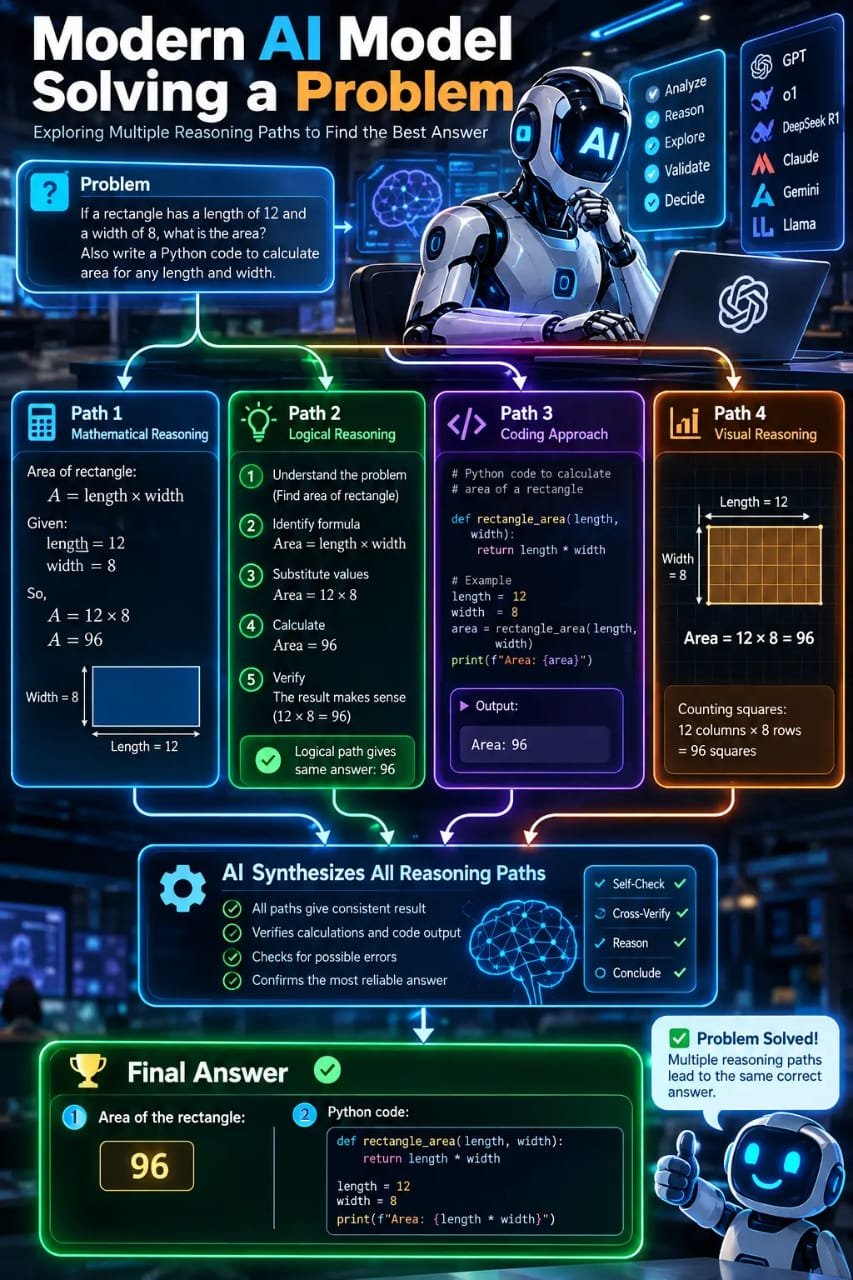
हा फरक “regular AI reasoning करू शकत नाही” असा absolute नियम नाही.
जुन्या AI systems मध्ये symbolic reasoning, theorem proving आणि search algorithms आधीपासून होते. Modern reasoning LLMs ची नवीनता अशी आहे की ते language models, reinforcement learning आणि inference-time computation यांना complex reasoning tasks साठी एकत्र आणतात.
Reasoning AI Model Timeline
| वर्ष | घटना |
|---|---|
| 1950 | Martin Davis यांच्याकडून automated logic/decision procedure चे महत्त्वाचे early work |
| 1956 | Logic Theorist — early heuristic AI reasoning milestone |
| 1956 | Dartmouth Summer Research Project — AI field साठी landmark event |
| 2017 | Transformer architecture — “Attention Is All You Need” |
| 2022 | ChatGPT ने generative AI mainstream केले |
| 12 Sept 2024 | OpenAI o1-preview आणि o1-mini |
| 20 Nov 2024 | DeepSeek-R1-Lite-Preview |
| 20 Jan 2025 | DeepSeek-R1 |
| 31 Jan 2025 | OpenAI o3-mini |
| 24 Feb 2025 | Claude 3.7 Sonnet — Anthropic च्या मते first hybrid reasoning model on the market |
| 16 Apr 2025 | OpenAI o3 आणि o4-mini |
Claude 3.7 Sonnet आणि Hybrid Reasoning
Reasoning AI च्या evolution मध्ये Anthropic चे Claude 3.7 Sonnet देखील महत्त्वाचे आहे.
Anthropic ने 24 February 2025 रोजी Claude 3.7 Sonnet release करताना त्याला “first hybrid reasoning model on the market” असे म्हटले.
त्याचे वैशिष्ट्य म्हणजे एकाच model मध्ये:
fast response mode + extended thinking mode
हे दोन्ही experiences उपलब्ध करण्यात आले.
यामुळे reasoning AI चा evolution फक्त “एक स्वतंत्र reasoning model” इथपर्यंत थांबला नाही.
पुढील direction होती:
Fast AI + Deep Reasoning + Tool Use
Reasoning AI इतका महत्त्वाचा का आहे?
Reasoning models चा फायदा विशेषतः अशा tasks मध्ये दिसतो जिथे answer एकाच step मध्ये मिळत नाही.
उदाहरणार्थ:
- complex mathematical problems
- multi-step programming
- scientific reasoning
- logical planning
- data analysis
- long-form problem solving
- complex tool-based workflows
OpenAI च्या पुढील reasoning models ने tool use आणि reasoning एकत्र करण्याकडेही मोठे पाऊल टाकले.
याचा मोठा अर्थ असा आहे की AI ची पुढची पिढी फक्त:
“Question → Answer”
इतकी मर्यादित राहणार नाही.
ती अधिकाधिक:
“Question → Plan → Reason → Use Tools → Verify → Answer/Action”
या दिशेने जाऊ शकते.
पण Reasoning AI म्हणजे Human-Level Thinking नाही
हा भाग खूप महत्त्वाचा आहे.
आज reasoning models complex problems वर remarkable performance देऊ शकतात.
पण त्याचा अर्थ:
“AI माणसासारखे पूर्णपणे विचार करते”
असा scientific conclusion काढणे योग्य नाही.
Benchmark success ही specific evaluation task वरील क्षमता दाखवते.
उदाहरणार्थ, OpenAI ने GPQA वर human PhD experts पेक्षा जास्त score दाखवला असला तरी त्यांनी स्पष्ट केले की याचा अर्थ model प्रत्येक बाबतीत PhD पेक्षा अधिक capable आहे असा नाही.
त्यामुळे reasoning AI कडे पाहताना excitement बरोबर technical caution देखील आवश्यक आहे.
FAQs: World’s First Reasoning AI Model
Q1. World’s first reasoning AI model कोणते आहे?
जर प्रश्न असा असेल की मानवी problem-solving style imitate करण्यासाठी तयार केलेला early AI reasoning program कोणता?, तर Logic Theorist (1956) हे सर्वात प्रसिद्ध historical answers पैकी एक आहे.
तो Allen Newell, Herbert A. Simon आणि J. C. Shaw यांच्या कामातून विकसित झाला आणि mathematical logic मधील theorems prove करण्यासाठी वापरला गेला.
परंतु “absolute first automated reasoning system” हा दावा अधिक गुंतागुंतीचा आहे, कारण Logic Theorist आधी automated-logic work अस्तित्वात होते.
Q2. OpenAI o1 हे पहिले reasoning AI model होते का?
Modern LLM era च्या दृष्टीने OpenAI o1 हा एक अत्यंत महत्त्वाचा early dedicated reasoning-model release होता.
OpenAI ने 12 September 2024 रोजी o1-preview आणि o1-mini release करून नवीन o-series models ला complex reasoning tasks साठी अधिक वेळ विचार करण्यासाठी design केले असल्याचे सांगितले.
मात्र “जगातील पहिले reasoning system” आणि “पहिले modern reasoning LLM” हे दोन समान claims नाहीत.
Q3. DeepSeek R1 हे पहिले reasoning AI होते का?
नाही.
DeepSeek-R1-Lite-Preview 20 November 2024 रोजी आणि DeepSeek-R1 20 January 2025 रोजी release झाले.
OpenAI o1-preview यापेक्षा आधी, 12 September 2024 रोजी उपलब्ध झाले होते.
DeepSeek चे historical importance reasoning ची invention करण्यापेक्षा reasoning models ला open-weight ecosystem मध्ये आणण्याशी अधिक जोडले जाते.
Q4. OpenAI o1 कसे reason करते?
OpenAI च्या मते o1 series large-scale reinforcement learning आणि chain-of-thought reasoning वापरून complex problems वर अधिक काळ विचार करण्यासाठी train केले गेले. OpenAI ने training-time आणि test-time compute दोन्हीमधून performance scaling दिसत असल्याचे सांगितले.
Q5. OpenAI o1 चा AIME score किती होता?
OpenAI च्या 2024 AIME evaluation मध्ये:
single sample — 74%
64-sample consensus — 83%
आणि 1,000 samples वर learned re-ranking वापरल्यास: 93% असा result प्रकाशित केला गेला.
Q6. Logic Theorist ने किती theorems prove केले?
Logic Theorist ने Principia Mathematica मधील Chapter 2 मधील पहिल्या 52 theorems पैकी 38 theorems successfully prove केले.
त्यापैकी एका theorem साठी त्याने अधिक elegant proof शोधल्याचा historical record आहे.
Q7. DeepSeek R1 चे $5.6 million training cost खरे आहे का?
इथे सावध राहणे आवश्यक आहे.
$5.576 million हा आकडा DeepSeek-V3 च्या official final training run साठी दिलेला estimate आहे.
DeepSeek-V3 report मध्ये 2.788M H800 GPU hours आणि $2/GPU-hour assumption वापरून हा figure दिला आहे. Reuters नेही under-$6-million cost claim ला DeepSeek-V3 शी जोडले आहे.
म्हणून तो आकडा थेट DeepSeek-R1 ची training cost म्हणून लिहिणे चुकीचे ठरेल.
Q8. DeepSeek R1 आणि OpenAI o1 मध्ये मुख्य फरक काय?
दोन्ही reasoning-focused models आहेत, पण त्यांची philosophy आणि availability ecosystem वेगळी आहे.
OpenAI o1 ने modern proprietary reasoning-model category ला मोठी चालना दिली.
DeepSeek R1 ने open-weight release, technical transparency आणि distilled reasoning models मुळे open ecosystem मध्ये मोठा प्रभाव निर्माण केला.
Q9. Chain-of-thought म्हणजे AI खरंच माणसासारखे विचार करते का?
नाही.
Chain-of-thought हा model च्या intermediate reasoning process साठी वापरला जाणारा technical concept आहे.
तो मानवी brain च्या thinking process चा identical replica आहे असे मानणे योग्य नाही.
Q10. Reasoning AI models भविष्यात महत्त्वाचे राहतील का?
2025 मध्ये OpenAI, DeepSeek आणि Anthropic सारख्या labs कडून reasoning-oriented models आणि hybrid thinking systems मोठ्या प्रमाणावर विकसित झालेले दिसतात. OpenAI ने o3/o4-mini सारख्या पुढील reasoning models मध्ये tool use आणि deeper reasoning एकत्र करण्यावर भर दिला, तर Anthropic ने hybrid reasoning model approach मांडला.
म्हणून reasoning ही modern AI development मधील एक महत्त्वाची technical direction बनल्याचे स्पष्टपणे दिसते.
अंतिम निष्कर्ष
World’s first reasoning AI model या प्रश्नाचे सर्वात प्रामाणिक उत्तर “एकच model” असे नाही.
इतिहासाकडे पाहिले तर Logic Theorist (1956) हा machine reasoning आणि automated theorem proving च्या विकासातील landmark program आहे.
तो अशा काळात आला जेव्हा computers मुख्यतः calculations साठी वापरले जात होते. Logic Theorist ने machine ला logical theorem शोधण्याच्या आणि problem-solving च्या दिशेने नेले.
त्यानंतर अनेक दशकांच्या symbolic AI, neural networks, machine learning, deep learning आणि Transformer research ने modern AI तयार होण्यासाठी पाया घातला.
आणि 12 September 2024 रोजी OpenAI o1-preview ने modern LLM ecosystem मध्ये एक मोठा बदल दाखवला: model ला complex problem वर उत्तर देण्याआधी अधिक reasoning computation देणे.
यानंतर DeepSeek R1 ने January 2025 मध्ये reasoning models च्या open ecosystem ला मोठी चालना दिली. त्याने दाखवून दिले की reasoning capability केवळ closed proprietary systems पुरती मर्यादित ठेवण्याची गरज नाही.
म्हणून या संपूर्ण इतिहासाकडे एका timeline प्रमाणे पाहणे अधिक योग्य आहे:
Logic Theorist → Symbolic AI → Neural Networks → Transformers → Large Language Models → OpenAI o1 → DeepSeek R1 → Modern Thinking Models
आजचा AI फक्त “उत्तर देणारा chatbot” राहिलेला नाही.
AI development ची दिशा हळूहळू:
Generate → Reason → Plan → Verify → Use Tools → Act
या model कडे जाताना दिसते.
आणि कदाचित reasoning AI च्या इतिहासातील सर्वात महत्त्वाचा प्रश्न “पहिले कोण?” हा नसून पुढचा असेल:
AI किती खोलवर reasoning करू शकते — आणि त्या reasoning ला आपण real-world कामामध्ये किती विश्वासार्हपणे वापरू शकतो?
संशोधनासाठी महत्त्वाचे स्रोत
Logic Theorist: Allen Newell आणि Herbert Simon यांच्या historical work मध्ये Logic Theory Machine च्या design आणि reasoning approach चे primary documentation उपलब्ध आहे.
OpenAI o1: OpenAI च्या September 2024 release मध्ये o1 चे reasoning approach, AIME, GPQA आणि Codeforces evaluations दिल्या आहेत.
OpenAI o1 System Card: o1 चे RL, chain-of-thought reasoning आणि safety evaluations यांचे technical documentation.
DeepSeek-R1 Technical Report: R1-Zero, R1, reinforcement learning, benchmarks आणि distilled models यांचे primary research.
DeepSeek-V3 Technical Report: $5.576M training-cost figure चा primary source.